Inside levis nzauckland airport emergency services: How Auckland Airport Keeps You Safe
May 19, 2026Airports run on precision. Flights, fuel, baggage, and people all move in tight choreography. When something goes wrong, seconds matter. This guide takes you inside Auckland Airport’s emergency response—what it is, how it works, what to do if you need help, and how businesses on site (from cafés to fashion retailers like a Levi’s stockist in NZ) fit into the plan. If you searched for “levis nzauckland airport emergency services,” you’re in the right place.
You’ll learn the essentials: the teams involved, the kinds of incidents they handle, how they coordinate with national services like Fire and Emergency New Zealand, Hato Hone St John, and New Zealand Police, plus clear steps for travellers and staff during an emergency.
What is
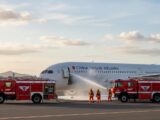
Auckland Airport’s on-airport emergency capability—often called the Airport Emergency Service (AES)—is a specialised unit that provides rapid response to aviation and terminal incidents. Their core mission is aircraft rescue and firefighting, supported by medical first response, hazardous materials containment, rescue on the airfield, and incident command until national agencies take over or work jointly on scene.
The service operates to international aviation standards (ICAO) and within New Zealand’s regulatory framework through the Civil Aviation Authority (CAA). AES teams train for high-risk, low-frequency events—engine fires, hard landings, fuel spills—as well as the everyday realities of a busy terminal: medical events, alarms, and evacuations. They’re embedded at the airport to meet strict response-time targets on the airfield while integrating seamlessly with off-airport responders.
How it works
When an incident occurs at or near Auckland Airport, a tightly scripted response begins. The goal: the right people and equipment on scene in minutes, working as one team under a clear command structure.
Dispatch and the first minutes
- Alerts can come from pilots, air traffic control (ATC via Airways New Zealand), airport operations, terminal alarms, or the public calling 111.
- AES is mobilised immediately with purpose-built firefighting and rescue vehicles. On the runway and movement areas, ICAO guidance targets a response time of around 2–3 minutes to any point in use.
- Terminal and landside incidents trigger a combined response: AES for initial action and life safety, with Fire and Emergency New Zealand (FENZ), Hato Hone St John (ambulance), and New Zealand Police en route as needed.
Command and coordination
- Incident command is established early, using common NZ emergency management principles so all agencies plug into one plan.
- Airlines, ground handlers, and airport operations provide crucial support—passenger manifests, aircraft data, fuel status, and facility access.
- Communication runs on dedicated aviation and emergency radio channels, with ATC controlling aircraft movements to keep responders safe.
Specialist capability
- Aircraft rescue and firefighting: high-capacity foam systems, dry powder agents, and tools to reach aircraft interiors quickly.
- Medical first response: stabilising patients until ambulance crews arrive; automated external defibrillators (AEDs) are widely available in terminals.
- Hazard management: containing fuel spills, isolating power or gas, and securing hazardous goods per IATA/ICAO rules.
- Evacuation and crowd safety: coordinated movement of passengers and staff, priority care for mobility and access needs.
Recovery and investigation
- Once immediate dangers are controlled, scenes transition to recovery: passenger care, re-opening facilities, and supporting airline disruption plans.
- Regulatory reporting and, where required, investigation support to the CAA and the Transport Accident Investigation Commission (TAIC).
- Debriefs and training updates to improve the next response.
Types / examples
Incidents at a major international airport fall into a few common categories. AES trains and equips for each.
- Aircraft-related: precautionary landings, brake or engine fires, landing gear issues, runway excursions.
- Medical: cardiac events, respiratory distress, injuries in terminals or on aircraft.
- Hazardous materials: fuel spills, battery incidents, lithium-ion smoke, declared dangerous goods leaks.
- Facilities and utilities: alarm activations, small structural fires, power or sprinkler faults.
- Environmental and weather: strong wind events, lightning proximity procedures, water ingress.
- Security-related: coordinated response with Police for threat assessments and public safety.
Example scenarios
A pilot declares a precautionary landing due to indicator lights. ATC alerts AES, foam-capable vehicles pre-position, and the runway is inspected after touchdown. No fire found; aircraft is escorted to the gate and engineering takes over.
A passenger suffers a cardiac arrest in the departure lounge. Airport staff start CPR and use an AED while AES medics arrive within minutes. Hato Hone St John assumes care on arrival, and the passenger is transported to hospital.
A catering truck clips a hydrant, causing a small fuel spill on the apron. AES isolates the area, applies absorbent materials, and coordinates cleanup with environmental teams before operations resume.
Pros and cons
On-airport emergency services bring speed and specialisation. There are trade-offs to understand.
- Pros:
- Fast response on the airfield and terminal.
- Specialist aircraft firefighting and rescue capability.
- Integrated with airport operations and ATC.
- Regular multi-agency drills and ICAO/CAA compliance.
- Cons:
- Scope is focused on airport property; major incidents still require additional national resources.
- Security, weather, or investigations can extend disruption while safety is assured.
- During peak periods, simultaneous events may require staged responses and mutual aid.
On-Airport AES vs Public Emergency Services: Who Does What?
| Aspect | Airport Emergency Service (AES) | Public Services (FENZ, Hato Hone St John, NZ Police) |
|---|---|---|
| Primary role | Aircraft rescue, firefighting, initial medical and hazard control on airport | Structural firefighting, medical transport and advanced care, law enforcement |
| Response area | Airside and terminal/landside within airport boundaries | Airport and surrounding communities across Aotearoa New Zealand |
| Response time target | Minutes to any point of the operational runway (per ICAO guidance) | As per national service standards and availability |
| Special equipment | Foam tenders, rapid intervention vehicles, aircraft entry tools | Pumpers, aerial appliances, ambulances, specialist police units |
| Command model | Initiates incident command on-airport; integrates partners | Unified command with AES; may assume lead depending on incident type |
| Typical handover | Stabilise and support; maintain aviation safety perimeter | Take over fire suppression, medical transport, investigation, or policing |
How to use or choose
Whether you’re a traveller, a member of airport staff, or a retailer (including fashion brands—yes, even a Levi’s stockist), the basics are the same: protect life first, signal early, and follow instructions.
What to do if you see an emergency at Auckland Airport
- Call 111 immediately. Say “Auckland Airport,” describe the location (gate number, check-in row, carpark level), and the nature of the emergency.
- Alert airport staff. Use information desks, airline counters, or any staff member with a radio or ID.
- Use help points or intercoms if you don’t have a phone. Follow on-screen instructions where provided.
- Keep yourself safe. Do not enter restricted or airside areas unless directed by responders.
- Follow evacuation tones and messages. Move calmly to the nearest safe area; assist people who need help if you can do so safely.
- Provide clear information to responders: what you saw, time, direction of smoke or movement, number of people involved.
- After the incident, only re-enter or resume travel when the all-clear is given.
For airport businesses and retailers
- Know your site plan: exits, assembly points, manual call points, extinguisher types, AED locations.
- Keep staff trained in basic first aid and evacuation procedures; complete warden training where required by the airport.
- Maintain clean, unobstructed back-of-house routes and secure storage of flammables and lithium-ion batteries.
- Report hazards early to airport operations. Small problems become big ones when ignored.
- During an alert, stop sales or service, secure cash/stock only if safe, and lead customers out—life before property.
For airlines and ground handlers
- Ensure crew and ramp teams are current on airport emergency procedures and local communications protocols.
- Have manifests and dangerous goods declarations ready to share with command.
- Nominate a liaison to plug into the incident command post and your airline’s disruption plan.
FAQ
What does “levis nzauckland airport emergency services” refer to?
It’s a common search mash-up that leads people to information about Auckland Airport’s emergency response. If you’re after Levi’s in NZ and emergency services at Auckland Airport, this guide covers the latter and notes how retailers on site fit into safety plans.
Who responds first to an aircraft emergency at Auckland Airport?
The Airport Emergency Service responds immediately, with ATC coordination. FENZ, Hato Hone St John, and Police support based on need.
Is there a direct number for the Airport Emergency Service?
In an emergency, always dial 111 in New Zealand. Within the airport, also alert staff or use help points. The AES is dispatched through established channels.
How fast can responders reach the runway?
ICAO guidance sets a target of roughly 2–3 minutes to any point of the operational runway. Auckland Airport’s on-site teams are positioned to meet that expectation.
Will my flight be delayed during an emergency?
It can be. Safety comes first. Runways or gates may pause while responders work, then reopen once hazards are cleared and inspections are complete.
Are there regular emergency drills at Auckland Airport?
Yes. Airports conduct exercises with airlines and public agencies to ensure readiness and compliance with CAA and ICAO requirements.
What should I do if I see smoke or a spill in the terminal?
Move away from the hazard, call 111, alert staff, and follow instructions. Do not attempt to clean or investigate fuel or chemical smells yourself.
Where can I find an AED at the airport?
AEDs are placed in visible locations throughout terminals. Look for green heart/bolt signage, ask staff, or check airport maps.
Who pays for emergency response?
Airport safety and response are part of airport operations and public services. Passengers are not billed for calling 111.
Does the airport emergency team handle security incidents?
They support life safety and evacuation. New Zealand Police lead law enforcement and security investigations, with AES and airport operations assisting.
What happens after an incident is resolved?
Areas are inspected, hazards removed, and operations resume in stages. Airlines communicate rebooking and care to affected passengers.
Key takeaways
- Auckland Airport’s AES is a specialised, on-site unit built for speed and aviation risks.
- They work hand-in-glove with FENZ, Hato Hone St John, NZ Police, ATC, airlines, and airport operations.
- In any emergency: dial 111, alert staff, follow instructions, and keep yourself safe.
- Retailers and businesses on site—from food to fashion—are part of the safety plan through training, clear exits, and swift reporting.
When seconds matter, a well-practised system makes the difference. That’s the heart of Auckland’s approach—and the reason searches like “levis nzauckland airport emergency services” lead here. Now you know what’s behind the scenes, and exactly what to do if the unexpected happens.